 |
The Rameswara Jyotir Lingam
Temple,
Rameswaram, Tamil Nadu
|
|
|
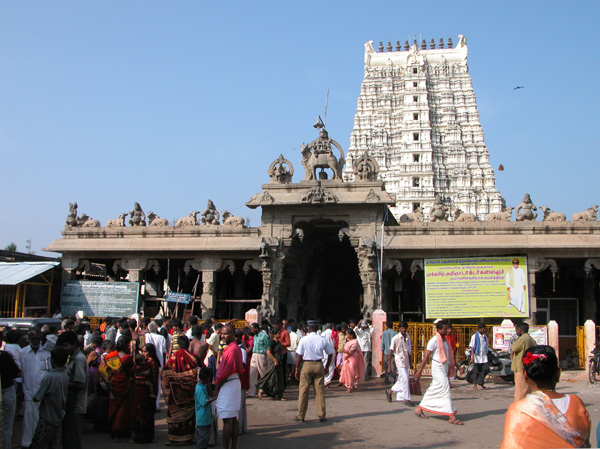
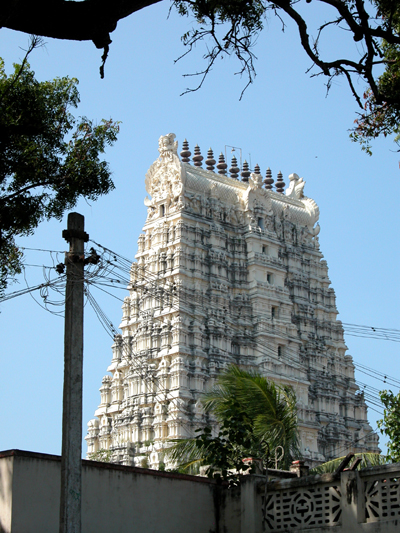
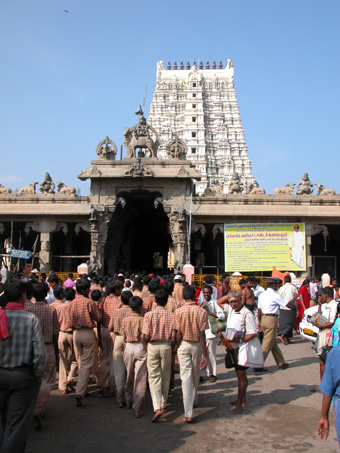
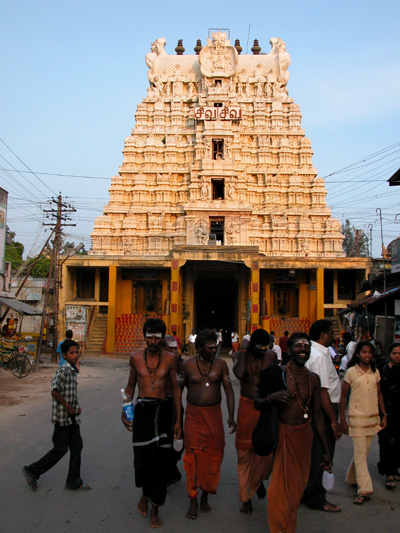
South main entrance and the 54m high southern Gopuram
|
|
The City and
Island of Rameswaram is one of the most significant pilgrimage
centres in South India for both Shaivites (Shiva worshippers) and
Vaishnavaites (Vishnu worshippers). It was here that Rama, an
incarnation of Vishnu and a hero of the Ramayana, offered thanks to
Shiva.
The famous
Rameswara Jyotir Linga Shrine is located in the city Rameswaram on
the island which is a part of the “bridge” to Sri Lanka at the
extreme south eastern point of the Indian peninsula. The Sethu
Bridge, also called Rama's Bridge or Adam's Bridge was constructed to link this
land to Sri Lanka for the Varnarams to reach Lanka. Read more about
the “bridge” to Sri Lanka last on this page.
Getting inside the
Sanctum Sanctorum in the Ramnathaswamy Temple
where the most revered Rameswara Jyotir Lingam is installed, is not
an easy task for non-Hindus. But being in a prayerfull mood with a
little luck it might happen for you.
The
Ramanathaswamy
Temple is
one of the largest in India and famous for its many Teerthams or
watertanks. There are a
total of 51 Teerthams, 22 of them situated inside the temple
compound. A
pilgrimage is considered complete with a bath and a sip of the
water in each of the 22 Teerthams and a
dip
in the Agni Teertham at the beach. All these waters are considered to have medicinal
qualities.
In
the vicinity on Gandamadana Hill, the highest point on the Rameswaram
Island, 3km northwest of the Ramanathaswamy Temple, the
two-storied Gandamadana Parvatam
can be found with the holy Padukas of Lord Rama.
Dhanushkodi
was completely destroyed by the cyclones in 1964.
Kothandaramaswamy Temple,
further out the island towards Sri Lanka, is the only construction
saved from the cyclone.
|
|
Worship
|
|
The worship at all the
Jyotir Lingam Temples is closely connected to the legends in the
Vedic literature. Before worshipping the Rameswara Jyotir Linga,
devotees should worship the Kasi Vishwanatha Jyotir Linga.
Anointing the idol by
bringing Ganga water especially from Gangotri, the offspring of
the Ganges river, gives one great religious merit. To
complete the ritual, sand
is taken from Rameswaram
to Allahabad and emerged
in the waters at Triveni Sangama which is the confluence of Ganga,
Yamuna and the invisible river Saraswati. This ritual is a symbol of
the integration from north to the south of Bharat (India) as seen by
the ancient seers.
It is the custom to
worship at Dhanushkodi (the easternmost point of the island) before
going to Rameshwaram. Several spots in Rameswaram Island are associated
with Lord Rama. The Kothandarama Temple stands at the spot where
Vibeeshanan sought refuge to Rama.
A pilgrimage is
only considered complete with a bath in the Agni Teertham.
|
|
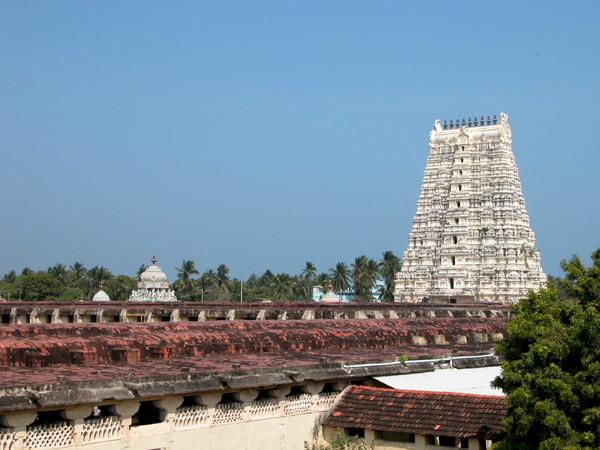
The Sikhara of the
Rameswara Jyotir Linga Shrine and the Southern Gopuram
|
|
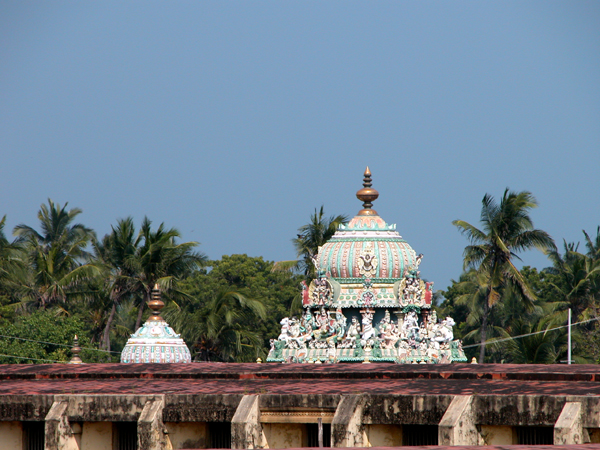
The Rameswara Jyotir Linga Shrine
only to be seen from roofs of nearby houses
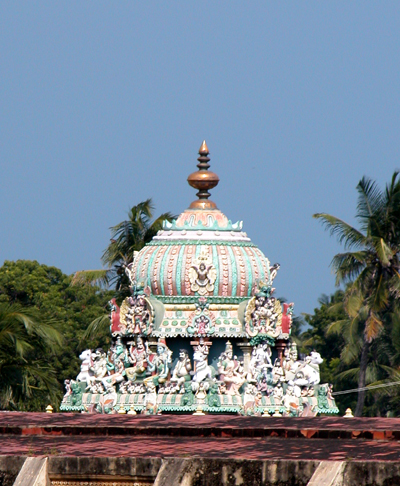
Sikhara over the Rameswara Shiva Lingam
|
|
The Rameswara
Jyotir Linga |
|
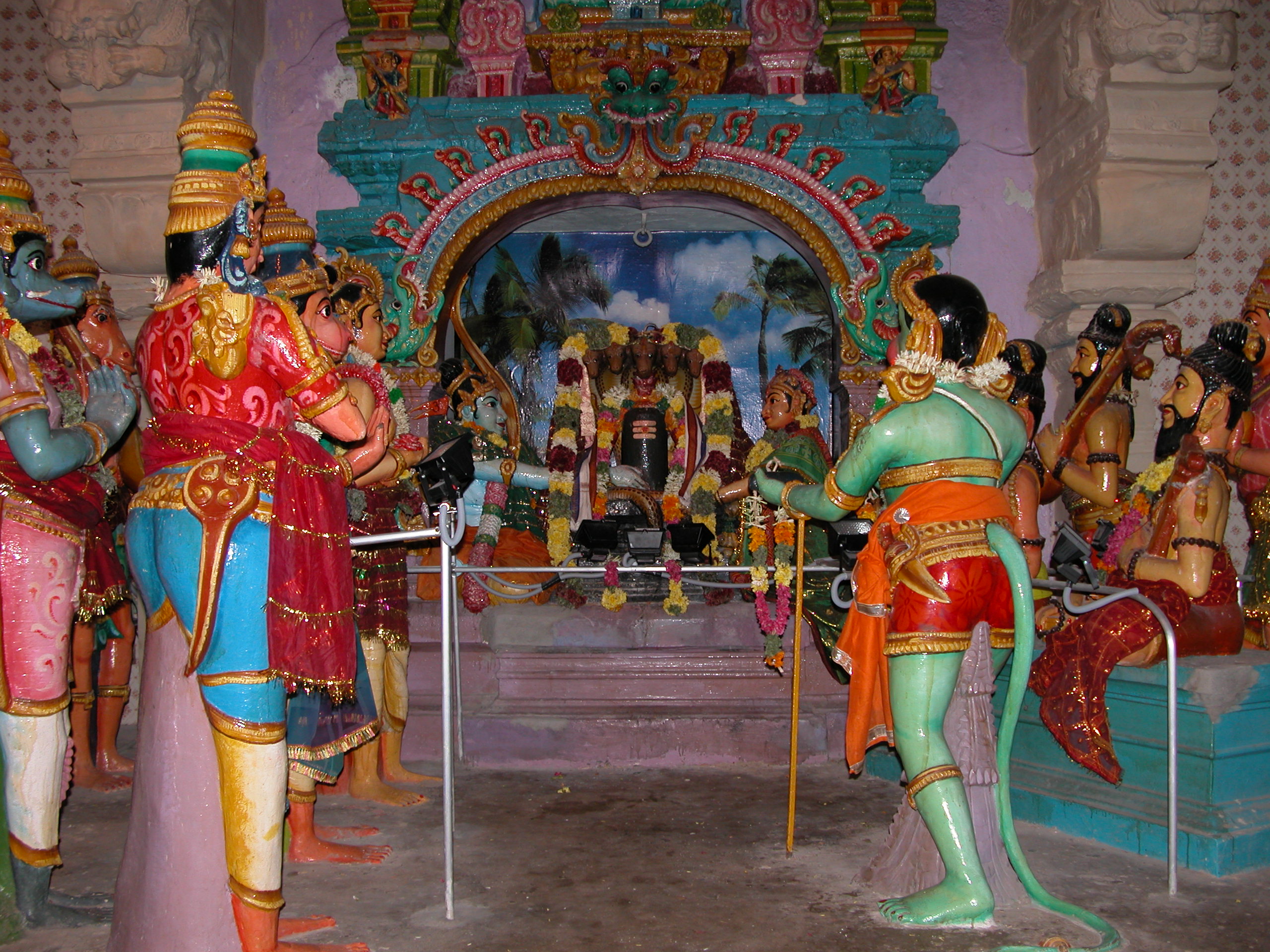
Tableau with the Rameswara Jyotir Lingam
|
|
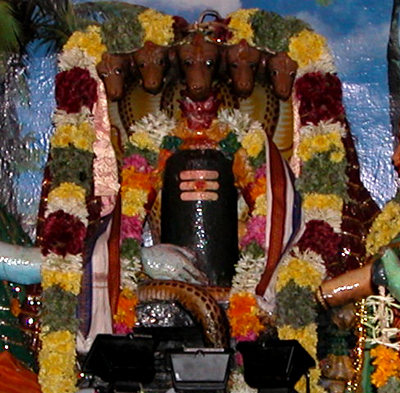
A model of the Rameswara Jyotir Lingam
No photo exists of the
most
sacred Rameswara Jyotir Lingam. But in the temple premises you find an
interesting
tableau with a model of the Shiva Lingam. The likeness is very good. The Shiva
Lingam is around 0,5m high and 20-25cm in diameter. This is only an estimate, as
the Shiva Lingam is placed in a cavelike very dark shrine, 8-10m from the
entrance. This makes it rather difficult to estimate the actual size.
Only Hindus may enter the inner Sanctum
Sanctorum, which is adorned with paintings depicting the origin of Rameswaram.
|
|
Rameswara means
“The God of Ram”, as
Lord Rama himself established this Linga
|
The Jyotir Lingam was worshipped by Lord Rama to atone the sin of
killing Ravana. Hanuman flew to bring the Linga from Kailasa, for
Lord Rama to worship. As it was getting late and Hanuman did
not arrive, Rama worshipped the
Lingam that was made of sand by Sita Devi. The Lingam thus worshipped by
Lord Rama became known as Ramanathar. When Hanuman returned he was
disappointed that his Lord had not used the Lingam that he had
brought. Lord Rama pacified Hanuman and named the Lingam
Hanuman brought, "Kasi
Viswanathar".
Thats why devotees bring sand from the beach of Rameswaram and take
it to Varanasi to offer it to the Viswanatha Shiva Lingam there. |
|
"The
thousand pillared"
Ramanathaswamy
Temple |
|
|
|
The
Ramanathaswamy Temple is a fine example of late Dravidian
architecture and is most renowned for it's magnificent corridors
lined with elaborately sculptured pillars. Founded by the Chola
rulers but expanded extensively during the Nayaka Period, in the
16th to 18th centuries, this massive temple is enclosed within a
high wall with five Gopuras (gate towers), where the tallest reach a
height of 54 meter. The temple compound as a whole is 300m long and 230m
wide.
The most remarkable feature of this temple is
the Sokkattan Mandapa, so called because it resembles a
Sokkattan (dice) in shape. It surrounds the inner temple on four
sides in a continuous corridor. It is the largest and most elaborate
of it's kind, with 1212 pillars extending 197m from east to west and
133m from north to south. From these corridors the name
“the
thousand pillared temple”
has its origin.
Several
Mandapams with smaller shrines to other deities and three Parakarams
is found in this magnificent temple. There is a huge Anjaneya in a
small shrine and a huge Nandi 4m long, 2,7m wide and 3m high, with the
idols of Viswanatha Naicker and Krishnama Naicker. There are shrines
for Ganapathi and Subramanya. To the right of the Rameswara Shrine is
the shrine for Parvathi. To its North is the Kasi Viswanathar's
shrine.
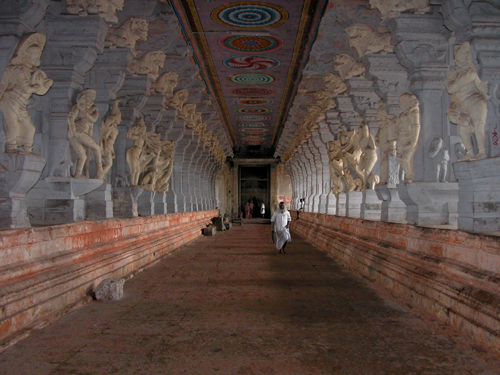
The impressing corridors of the huge
Ramanathaswamy Temple,
which is also called "the thousand pillared temple".
|
|
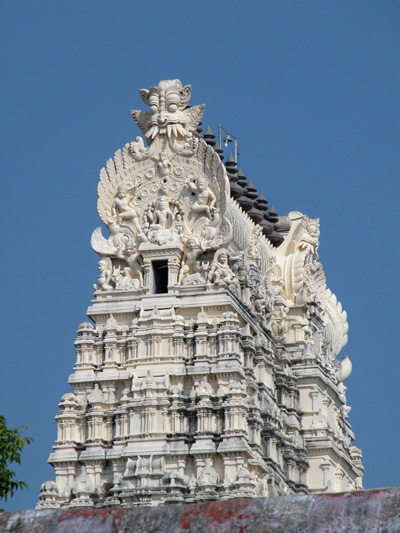
The impressive 54 m high southern Gopuram
with demons guarding the temple
|
|
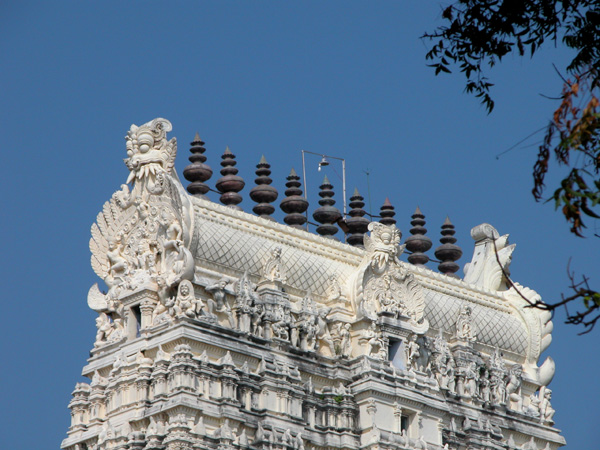
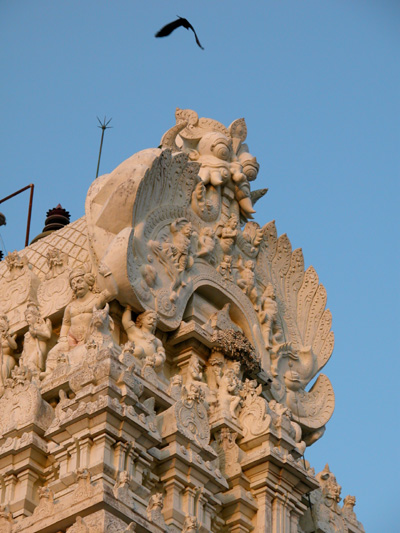
The top of the Southern Gopura
|
|
Inside the temple
premises |
|
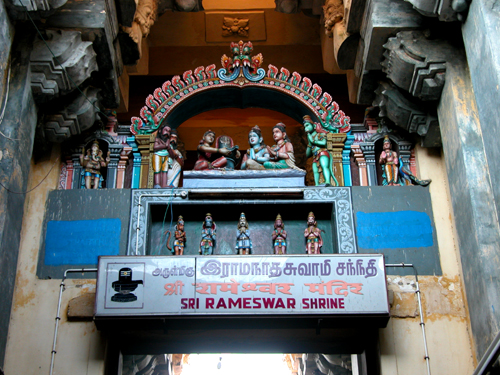
Entrance to the Rameswara shrine
|
|
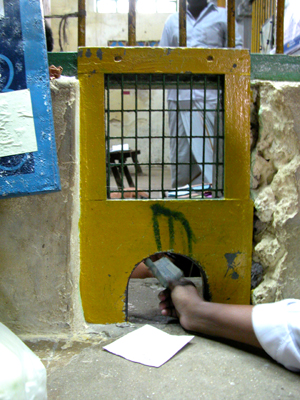
Puja counter
|
|
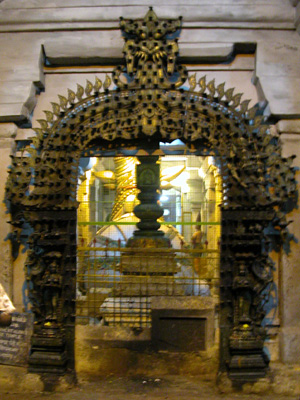
Entrance with the flagpole base and the huge Nandi bull,
this is absolutely the closest you can get with a camera
|
|
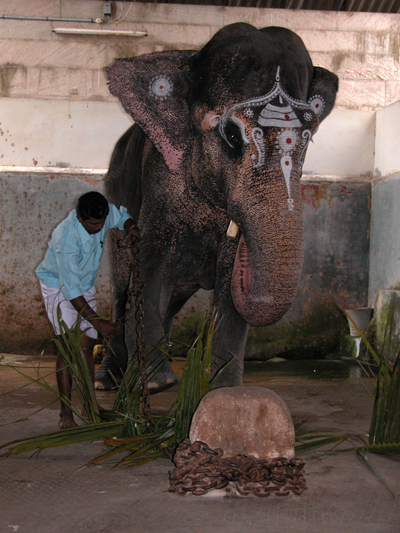
Temple elephant in the stable
|
|
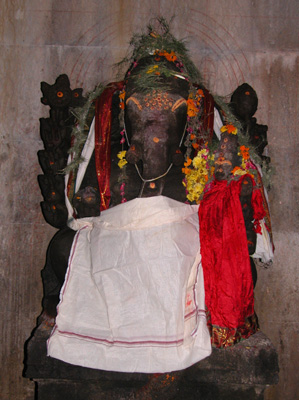
Ganapati
|
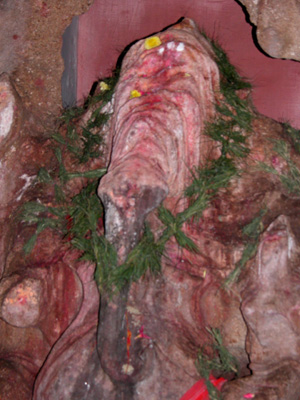
Very old Ganapati
|
|
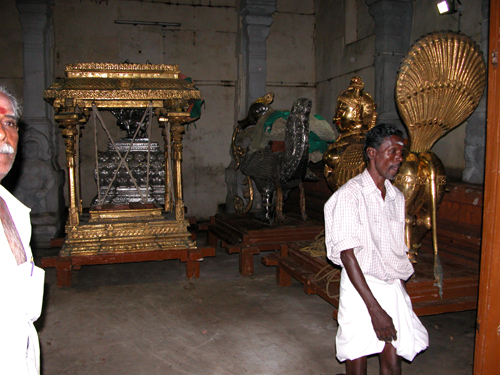
Chamber with the procession Mantapas and other idols
|
|
Ablution from the
22 Teerthams |
|
|
|
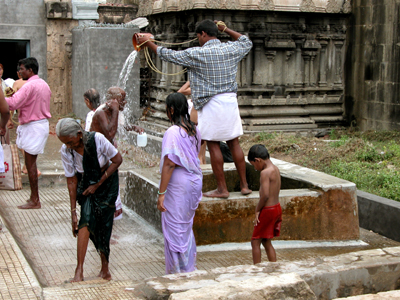
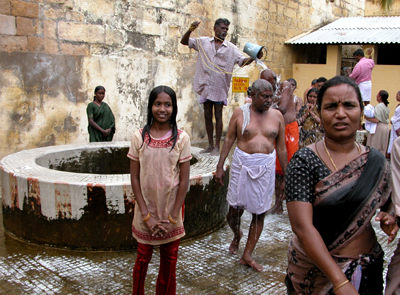
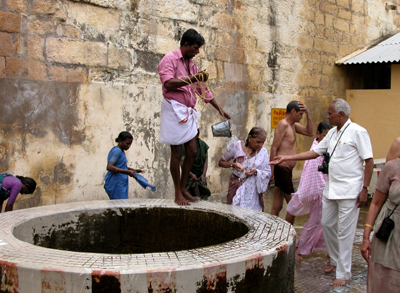
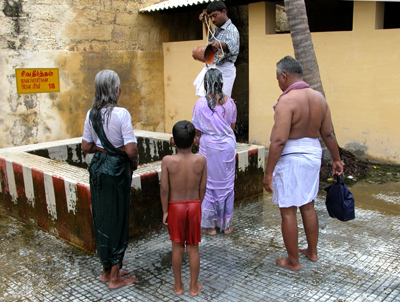
The absolute most spectacular Abisheka ritual in
India you will find in
the Rameswara Temple. Inside the temple compound 22 Teerthams has been
constructed with water from supposedly all the holy rivers of India.
Each of the 22 Teerthams (tanks) are believed by devotees
to have particular powers and every day you will see ritual bathing taking place
under great commotion!
The number of Teerthams is said to correspond with the number of arrows in
Rama's quiver, with which he used to generate water on the island.
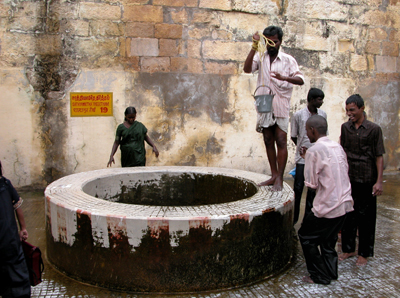
The
water in each of the 22 sacred wells
are considered to have medicinal
qualities
and
is said to taste differently.
You will need help from the temple staff to perform
this elaborate purification ritual. At each Teertham the holy water will be poured over you 3 times. This
add up to 66 times ablution and purification and it's a great pilgrim feast in
the huge temple. Done in the night, when it is dark, you can easily get lost. So
follow the temple staff or a guide, don't go by yourself. |
|
 |
|
 |
|
 |
|
|
|
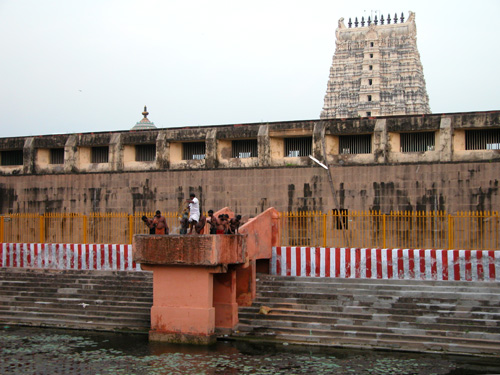
The huge temple pond or Theertham.
|
|
The Agni Teerth |
|
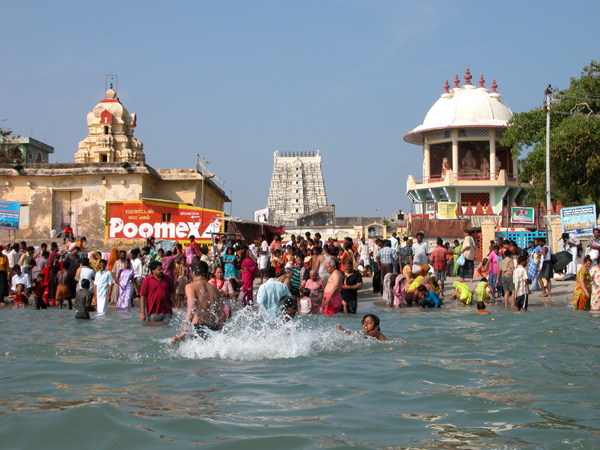
The "Agni Teerth" with the South Gopuram
of the Ramanathaswamy Temple
in the background
|
|
|
|
|
|
|
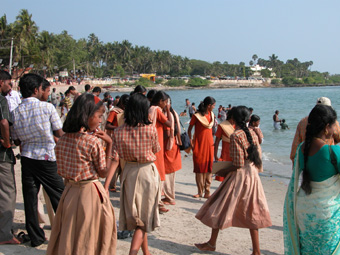
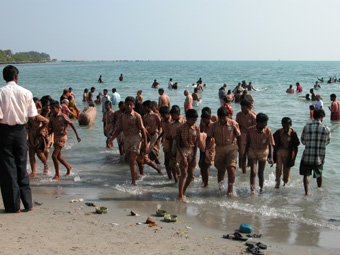
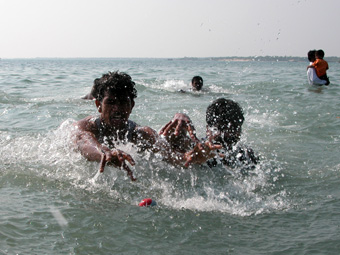
The
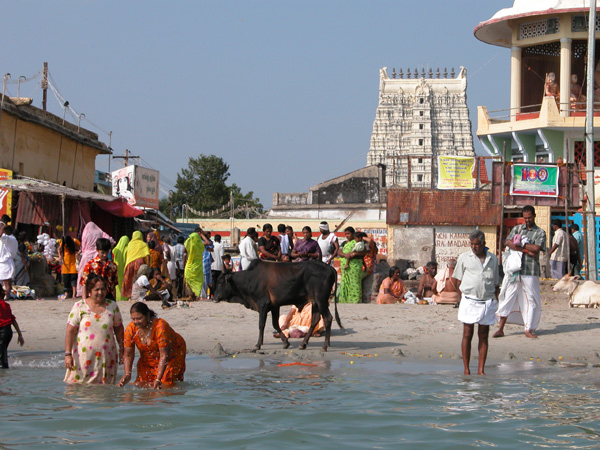
Agni Theerth is the name of the beach 100 metres from the temple.
It is
here Rama worshipped Lord Shiva, to absolve himself from the
killing Ravana. It is believed that that a dip in the sea at
this point removes all sins and therefore the beach is swarmed with
devotees from early morning till sunset.
A pilgrimage is
only considered complete with a bath in the Agni Teertham. |
|
|
|
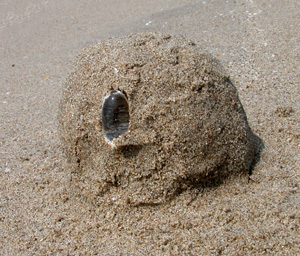
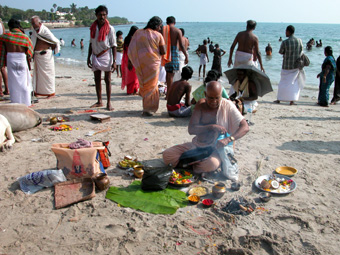
A Linga made of sand from Agni Teerth,
is all it takes to worship Lord Shiva
|
 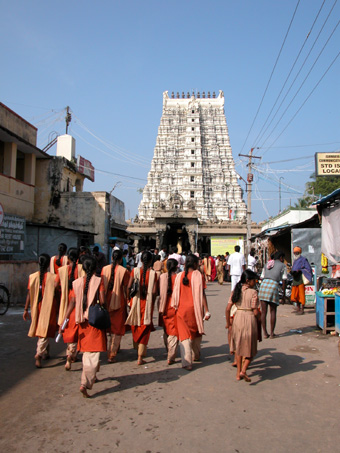
Southern gate
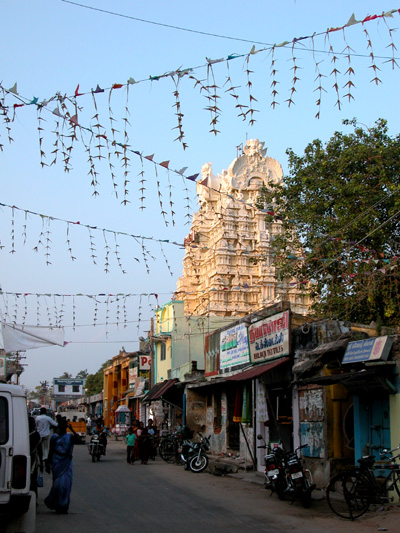
Northern gate
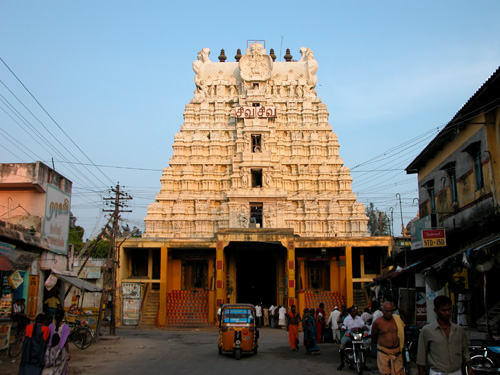
Northern gate at sunset
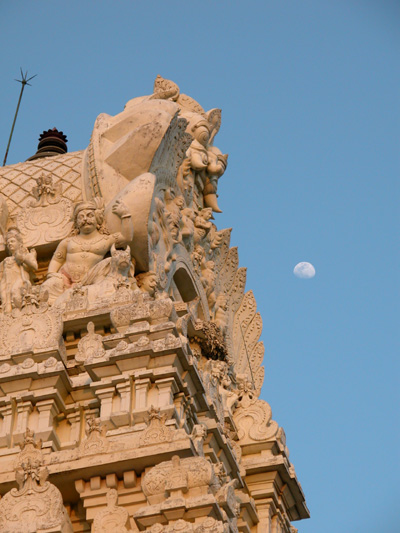
Detail of the northern gate in the waxing moon
|
The bridge to
Rameswaram |
|
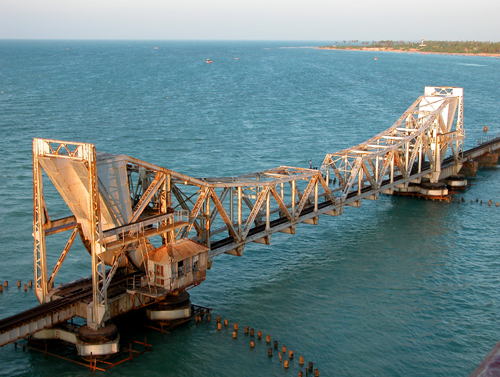
The Indira Gandhi Railway Bridge
|
|
Rameswaram City is situated on Rameswaram Island in the Gulf of Mannar between
India and Sri Lanka. The island is connected to the
mainland at Mandapam city by rail and by one of India's greatest engineering
wonders, the Indira Gandhi Bridge. It was opened by her son Rajiv Gandhi in
1988. |
|
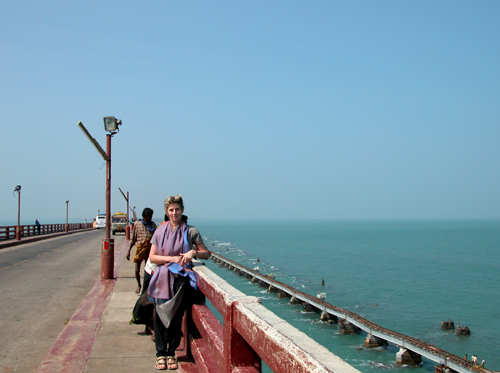
The auto bridge and railway
|
|
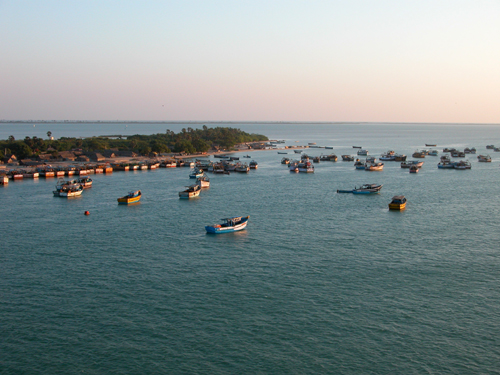
Fishing boats in the sunset seen form the bridge
|
|
The Rama Temple on
Gandamadana Hill |
|
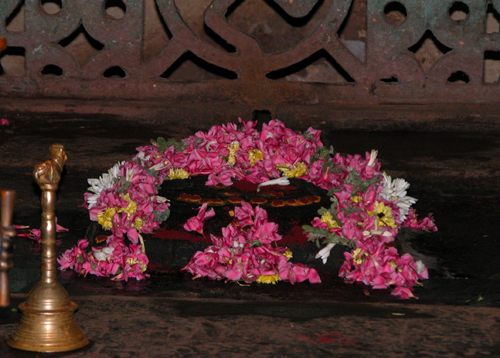
Rama Padukas placed on a Chakra
|
|
On Gandamadana Hill, the highest point on the Rameswaram
Island, 3km northwest of the Ramanathaswamy Temple, the
two-storied Gandamadana Parvatam is situated. It shelters the
footprint of Rama and is therefore a most revered shrine. The imprint of Lord Rama's feet is,
in this shrine, placed on a
Chakra (wheel). |
|
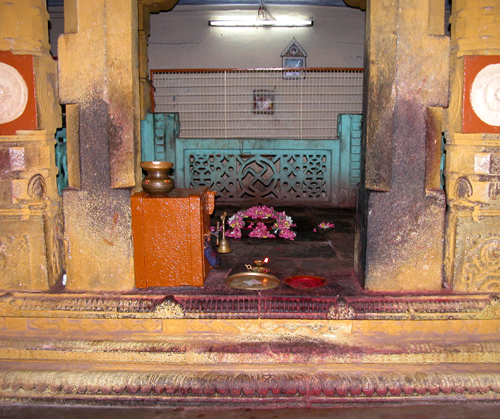
The Rama Paduka Shrine
|
|
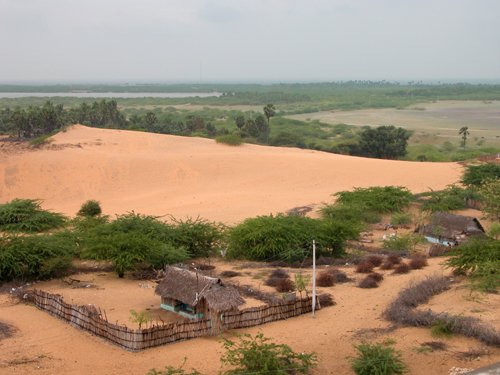
View from the Rama Paduka Shrine
|
|
The Kothandaramaswamy Temple |
|
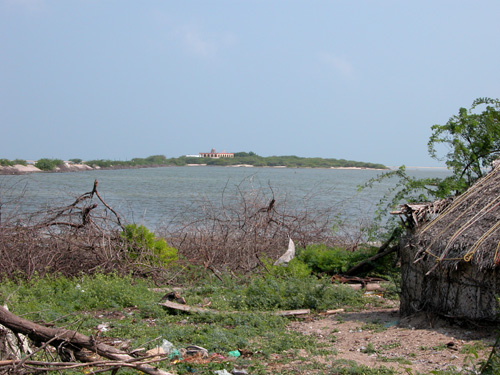
The Kothandararamaswamy Temple seen from the road
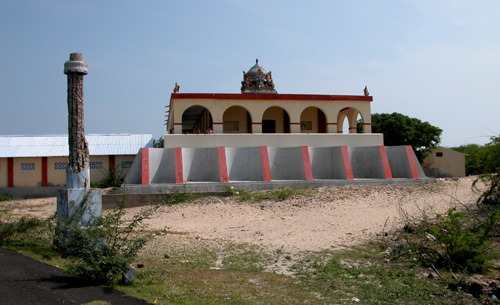
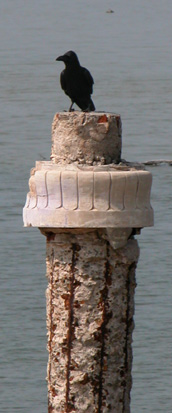
Coming closer ...
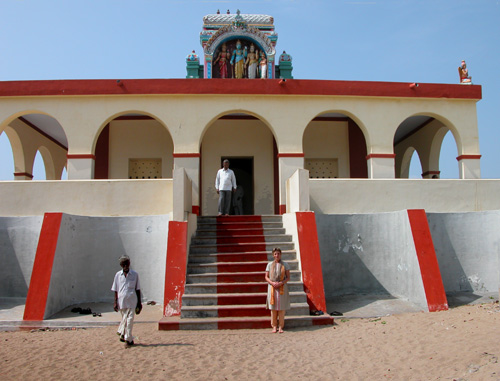
... Up stairs. The temple is constructed apr. 2 m above
ground level
because of flods in the area.
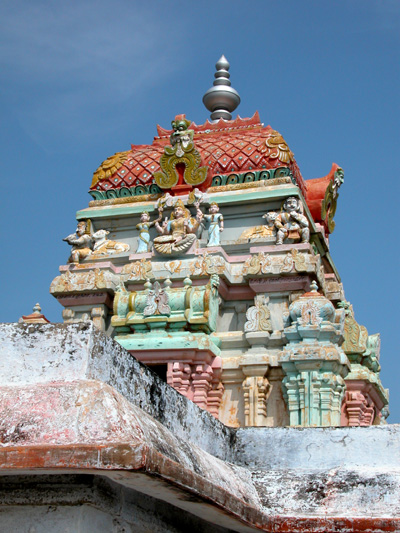
Sikhara over the Sanctum Sanctorum
|
|
Kothandaramaswamy Temple was the only construction left
by a cyclone in 1964.
Dhanushkodi
and surroundings were completely destroyed by the cyclone.
Idols of Rama, Sita, Lakshmana, Hanuman and Vibhishana (brother
of Ravana), surrendered to Rama here and this incident makes
this remote temple a very important place of worship. |
|
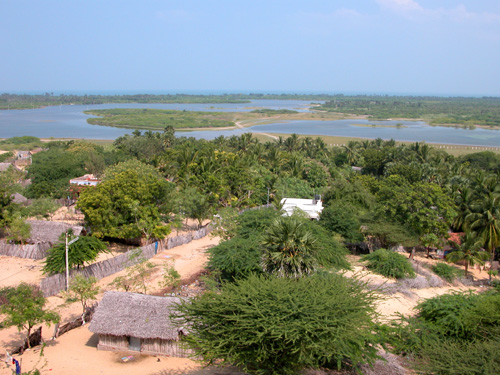
View from the
Kothandaramaswamy Temple
|
|
Lord Rama's "Bridge" to
Sri Lanka |
|
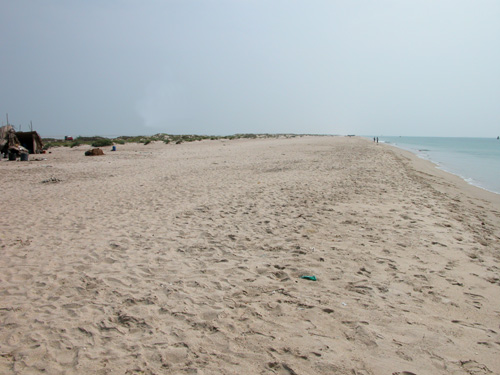
The beach on the way to "Dhanuskodi", a part of
"The Bridge to Sri Lanka",
seen in the direction of Sri Lanka
|
|
"Rama's Bridge" refers to the chain of
reefs, sandbanks and islets that almost connects Sri Lanka with India.
Dhanuakodi is the southeastern tip of the Rameswaram Island about
18km from the main Rameswaram Temple. The island has a spectacular
beach and the last 4km to Dhanuskodi you have to walk on foot
through fishing communities.
From here a series of boulders, known
as Rama's or Adam's Bridge is
connecting the two countries and can be seen both over and under
water. Legend says that these are the stepping stones created and
used by Hanuman in search to rescue Sita. |
|
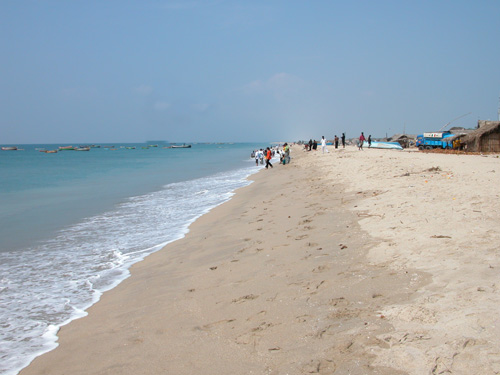
The beach on the way from Dhanuskodi, seen in the
direction of
India
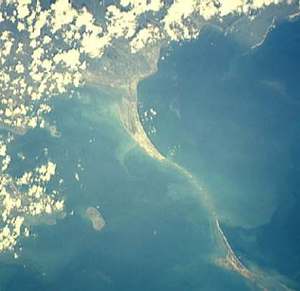
Rama's Bridge to Sri Lanka.
"Dhanuskodi" is in the middle of the photo.
http://www.vahini.org/ramakatha2/ch7-bridge.html
|
|
Archeology: The first signs of
human inhabitants in Sri Lanka date back to the Stone
Age, about 1.750.000 million years ago. These people are
said to have come from the South of India and reached
the Island through a land bridge connecting the Indian
subcontinent to Sri Lanka named Rama's Bridge. This is
narrated in the Hindu epic of Ramayana. |
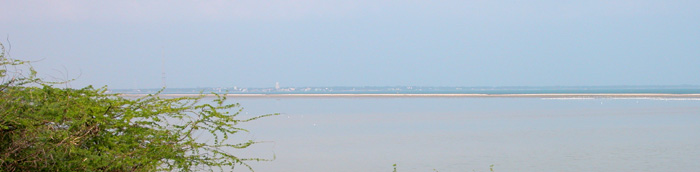
The Gopuram of the
Ramanathaswamy Temple
in Rameswaram is seen from the road to Dhanuskodi
OM Namah Shivaya
|
mukti4u2@gmail.com |
 |
www.mukti4u2.dk |
mukti4u2.dk
► created by
BP
|